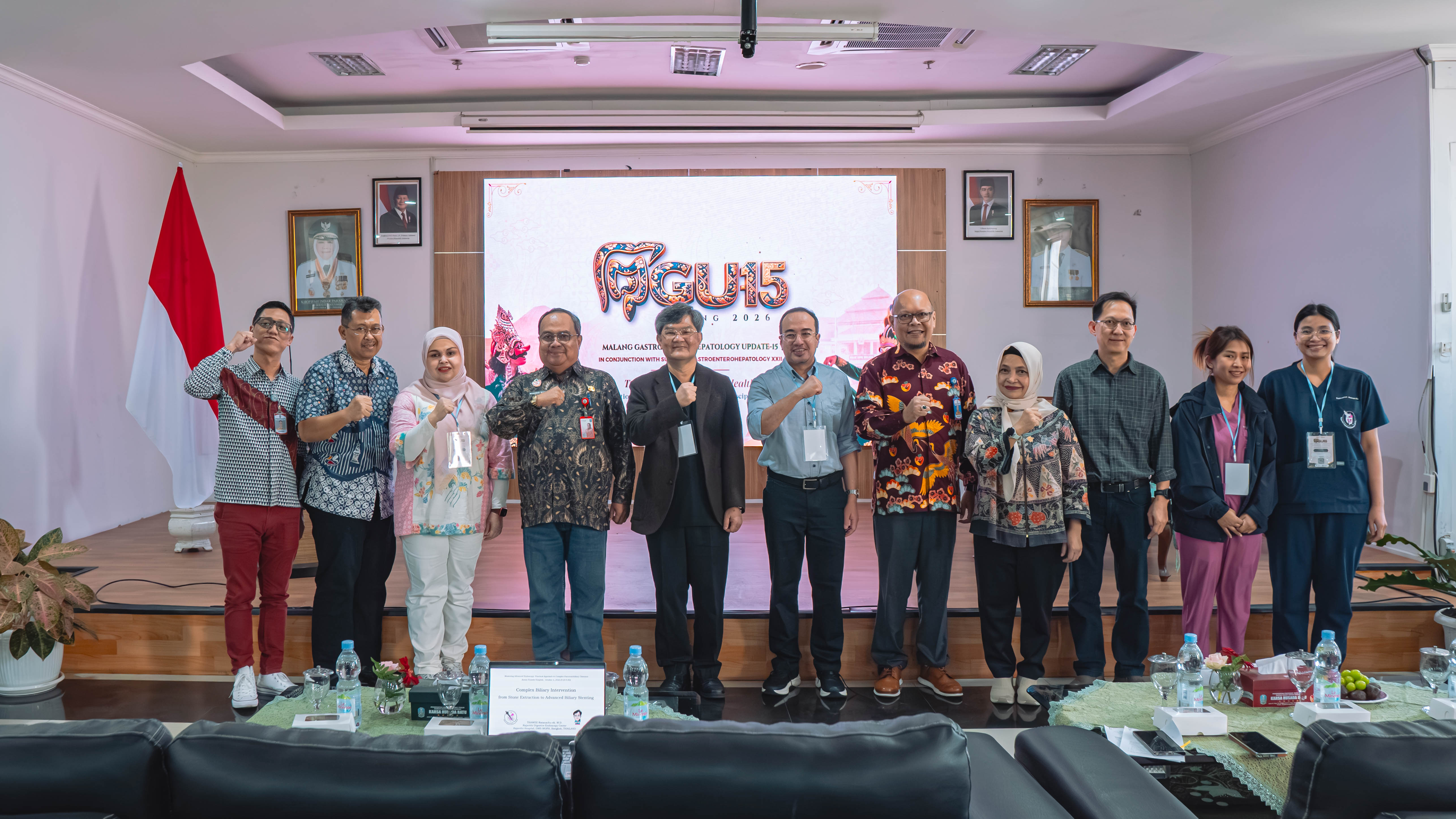
Malang, October 3, 2026 — The Malang Gastroenterohepatology Update 15 (MGU 15) 2026 continued on Saturday, October 3, with a full day of scientific sessions at Atria Hotel & Convention Malang. Bringing together gastroenterology and hepatology experts from Indonesia and Thailand, the first main scientific day focused on contemporary developments in clinical practice, endoscopy, gastrointestinal disorders, and hepatology.
The program was organized by the Gastroenterology Division of the Faculty of Medicine, Universitas Brawijaya–Saiful Anwar General Hospital (FKUB-RSSA), with Kusuma Enterprise entrusted with the event management and implementation.
Following the practical workshops held on the previous day, the program at Atria Hotel moved into a broader scientific forum featuring a Plenary Lecture, International Lecture, Opening Ceremony, Scientific Symposia, Lunch Symposium, and parallel scientific presentations.
The sessions provided participants with opportunities to explore current clinical perspectives while engaging directly with speakers and fellow healthcare professionals.
From Clinical Evidence to Everyday Practice
The scientific program opened with a Plenary Lecture delivered by Supriono, MD, PhD, FACG (Malang), entitled “Albumin Matters: Optimizing Therapy, Improving Outcomes.”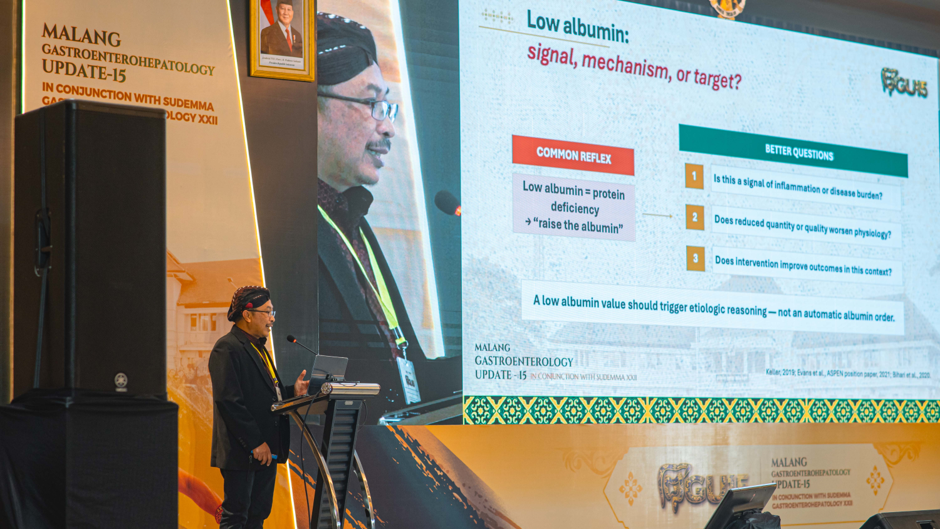
The session highlighted the importance of considering clinical evidence and therapeutic approaches in relation to patient outcomes, setting the tone for a day focused on translating scientific developments into clinical practice.
The program continued with an International Lecture by Prof. Thawee Ratanachu-Ek, MD, FRCST (Thailand), entitled “Beyond The Scope: Advancing EUS and ERCP in Modern Pancreatobiliary Care.” The session brought an international perspective to the development of advanced endoscopy and pancreatobiliary care.
For Supriono, MD, PhD, FACG, the value of a scientific meeting lies not only in presenting the latest evidence, but also in creating opportunities to consider how developments in medicine can be translated into practical clinical settings.
“Scientific development becomes more meaningful when it can be connected with clinical practice. Forums such as MGU provide an opportunity for healthcare professionals to review current evidence, exchange experiences, and consider how these developments can contribute to better patient care.”
MGU 15 2026 Officially Opens Its Main Scientific Program
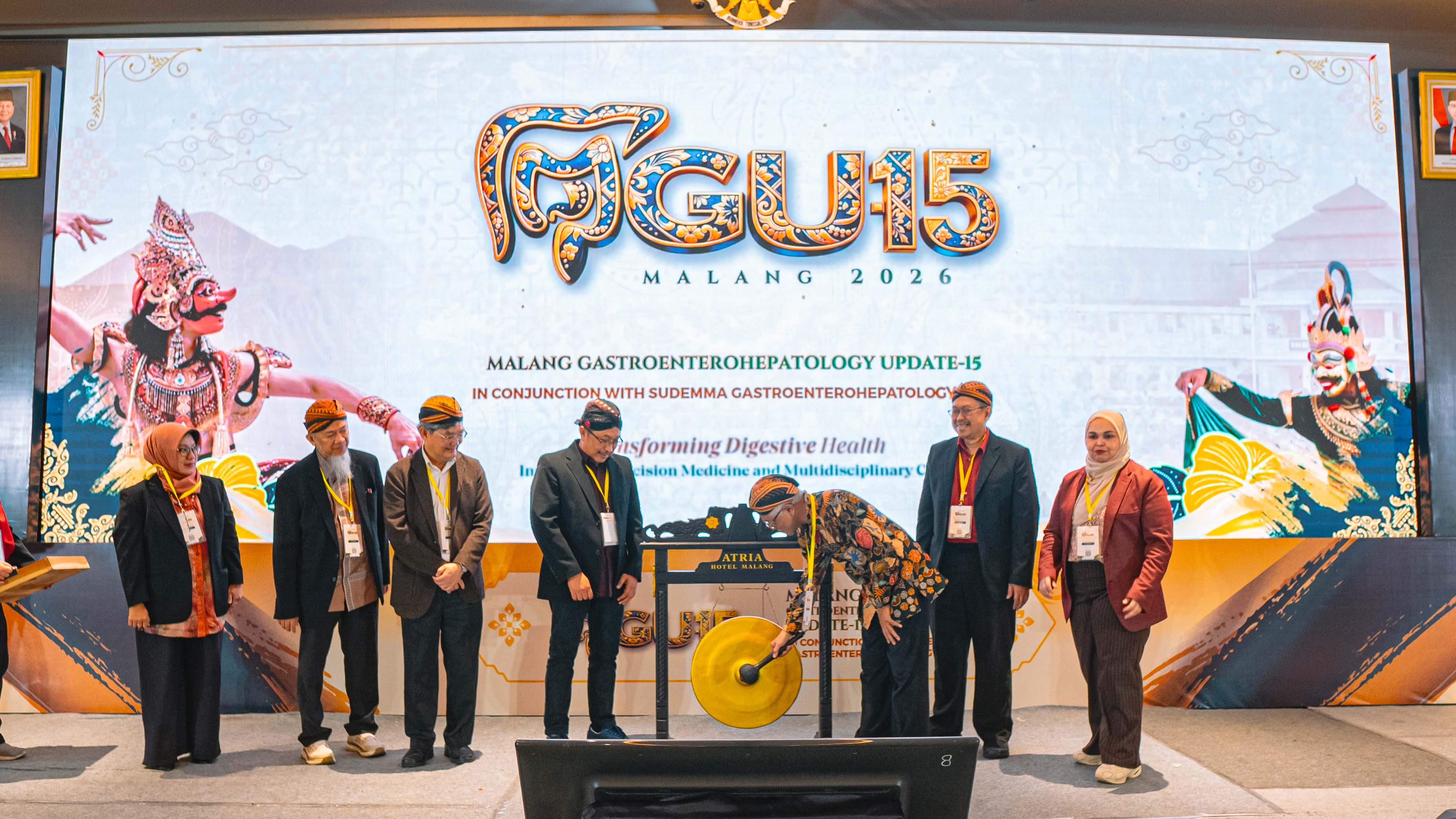
The scientific sessions were followed by the Opening Ceremony of MGU 15 2026, beginning with the singing of the Indonesian national anthem and remarks from representatives of the gastroenterology and internal medicine community.
The opening featured remarks by Boqi Pratomo Wibowo, MD, PhD (Malang), Nur Samsu, MD, PhD (Malang), and Supriono, MD, PhD, FACG (Malang). The ceremony formally opened MGU 2026 through a ceremonial gong striking.
The opening reflected the collaborative character of MGU 15, bringing together professional organizations, clinicians, speakers, and participants within a shared scientific forum.
Colorectal Cancer and Colonoscopy Optimization
The first scientific symposium of the day addressed the colorectal cancer continuum, with a focus on colonoscopy optimization and the prognostic role of albumin.
The session, chaired by Mochamad Fachrureza, MD (Malang), featured Boqi Pratomo Wibowo, MD, PhD, who discussed “Optimizing Lesion Detection in Colonoscopy through Effective Bowel Cleansing,” followed by Supriono, MD, PhD, FACG, who presented “Prognostic Role of Albumin Level in Colorectal Cancer.” The symposium concluded with a discussion involving both speakers.
The session demonstrated how clinical outcomes can be influenced by factors across the diagnostic and therapeutic pathway, from the quality of colonoscopy preparation to the interpretation of prognostic indicators.
Advancing Care in Ulcerative Colitis and IBD
The scientific discussion continued through Scientific Symposium 2, which focused on advancing care in ulcerative colitis through the integration of mesalazine and budesonide MMX.
The session was chaired by Supriono, MD, PhD, FACG, with presentations from Budi Widodo, MD (Surabaya) and Syifa Mustika, MD, PhD (Malang). Topics included the optimization of mesalazine as a first-line treatment for mild to moderate ulcerative colitis and the transition toward more targeted approaches in IBD care.
The session reinforced the importance of continuing to evaluate treatment strategies as clinical evidence and therapeutic options evolve.
Bringing Together National and International Perspectives
One of the defining features of the MGU 15 scientific program was the combination of national expertise with international perspectives.
Speakers participating throughout the program came from Malang, Jakarta, Surabaya, Makassar, Denpasar, and Thailand, creating opportunities for participants to encounter different clinical experiences and approaches within a single scientific forum.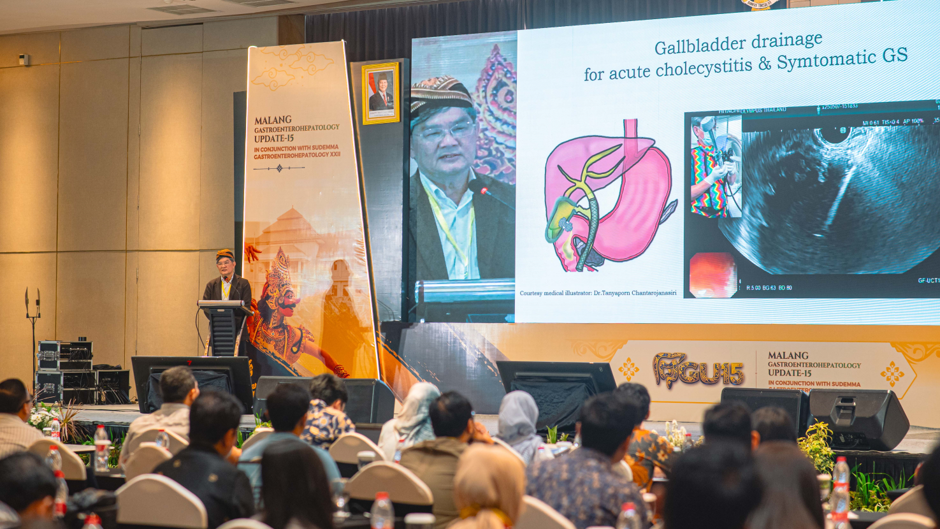
Prof. Thawee Ratanachu-Ek's participation was particularly significant as he contributed to both the practical Advanced Workshop on October 2 and the main scientific program on October 3. His International Lecture focused on the continuing development of EUS and ERCP within modern pancreatobiliary care.
“Endoscopy continues to develop, and continuous learning is essential for physicians working in this field. International and cross-institutional exchange allows us to share different experiences, discuss evolving approaches, and learn from one another in order to continuously improve patient care.”
The presence of international faculty complemented the broader objective of MGU 15 2026 to create an environment where scientific knowledge and clinical experience could be exchanged across professional and geographic boundaries.
Scientific Learning Continues Through the Afternoon
The scientific program on October 3 continued with a Lunch Symposium focusing on acid suppression and related clinical considerations. The session featured Supriono, MD, PhD, FACG, among other speakers, and provided another opportunity for participants to engage with contemporary therapeutic discussions.
The broader program also included oral presentations and parallel scientific activities, allowing participants to engage with multiple forms of academic and clinical exchange throughout the day.
Rather than concentrating on a single area of gastroenterology, the program covered a broad spectrum of issues—from colorectal cancer and inflammatory bowel disease to endoscopy, acid suppression, and pancreatobiliary care.
This breadth reflected the multidisciplinary nature of contemporary gastroenterology and hepatology practice, where clinical decision-making increasingly requires integration across different areas of expertise.
A Platform for Continuous Professional Development
The first main scientific day of MGU 15 2026 ultimately served as more than a series of lectures. Through presentations, discussions, international exchange, and parallel academic activities, the program created space for healthcare professionals to revisit established approaches while exploring emerging developments in the field.
The combination of scientific evidence, clinical experience, and professional dialogue remained a central element throughout the day's program.
For Kusuma Enterprise, the implementation of the MGU 15 scientific program represents part of its role in supporting the delivery of professional and knowledge-based events. Through structured event management and coordination, Kusuma Enterprise supported the implementation of a program that brought together multiple scientific sessions and professional interactions within one integrated event.
As the first main scientific day came to an end, MGU 15 2026 prepared to continue its program on Sunday, October 4, with further scientific symposia, the MGU Award Final Round, and the closing ceremony.
The three-day event continued to demonstrate the importance of scientific forums in connecting evidence, clinical practice, and professional collaboration—with the shared objective of supporting continuous learning and the advancement of gastroenterology and hepatology care. (htw)